Trading Card Games
Deck construction, card interaction, strategy, balance, archetypes and competitive play.

GhostWrite Studios Journal
Game Night covers tabletop games, trading card games, board games, game design, playtesting, local gaming communities and the development of Genome: Apex Shifting.
This is where mechanics are tested, strategies are argued over, decks are rebuilt and otherwise reasonable adults spend twenty minutes debating the meaning of one sentence printed on cardboard.
Game Night is the tabletop gaming category of the GhostWrite Studios Journal.
It covers trading card games, board games, card game mechanics, playtesting, indie game development, game stores, gaming communities and the process of turning a game concept into something other people can actually learn and play.
It also serves as the development journal for Genome: Apex Shifting, an original competitive trading card game created through GhostWrite Studios.
Tabletop Topics
Game Night covers both the creative and practical sides of tabletop gaming.
Deck construction, card interaction, strategy, balance, archetypes and competitive play.
Reviews, mechanics, replayability, player interaction, accessibility and tabletop experience.
Rules, systems, player choices, theme, balance, pacing and the relationship between mechanics and story.
Rules clarity, deck balance, learning difficulty, player behavior and using feedback without redesigning the game after every opinion.
Prototyping, artwork, production, marketing, community building and developing a tabletop game from the ground up.
Community events, game nights, playtesting spaces, local stores and the people who keep tabletop gaming social.
Articles from designers, players, artists, reviewers, playtesters and members of local gaming communities.
Starter decks, ecosystems, Genes, Afflictions, Climate, Hybrid Apex predators and alpha playtesting.
Trading Card Games
A trading card game, commonly called a TCG, is a competitive card game in which players build decks from a larger collection of available cards.
Players use creatures, actions, resources, abilities and card combinations to pursue a victory condition.
Strong TCGs reward deck construction, tactical decisions, knowledge of card interactions and the ability to adapt when an opponent refuses to follow the elegant plan you built in your imagination.
A good trading card game provides meaningful choices, clear rules, strategic variety and enough interaction to keep both players involved.
Cards should create combinations without reducing the game to one dominant strategy. Strong decks should feel powerful without making weaker decks irrelevant.
The game should also provide multiple paths to victory and room for players to express different play styles.
Choices should create consequences rather than merely fill time between draws.
Aggressive, defensive, control, combo and adaptive strategies should all have room to function.
Players should not need a committee hearing to determine what a card does.
Players need opportunities to respond, adapt and recover from pressure.
Different draws, strategies and matchups should create new decisions across repeated games.
Mechanics should reinforce the world and identity of the game rather than existing as unrelated math.
Board Games and Tabletop Design
A good tabletop game gives players understandable goals, meaningful choices and enough interaction to make each session feel different.
The rules should be clear enough to learn without removing the depth that encourages players to improve.
Theme and mechanics should support one another. If a game claims to be about survival, diplomacy or exploration, the player should experience those ideas through decisions rather than merely read them in flavor text.
A traditional board game usually includes a fixed collection of components designed to be played together.
A trading card game allows players to build customized decks from a wider card pool, creating different strategies and combinations.
Both can involve tactical decisions, resource management, competition, cooperation and replayable systems. The distinction usually lies in how components are collected, customized and used.
Testing the Game
Tabletop game playtesting involves observing players as they learn, understand and play a game.
The designer evaluates rules clarity, pacing, balance, strategy, player engagement and whether the game produces the intended experience.
Playtesting is not simply asking whether players liked the game. It means watching where they become confused, which choices feel meaningful, which cards dominate and where the game quietly stops being fun while everyone remains too polite to mention it.
Can players understand the rules without constant explanation from the designer?
Are certain decks, cards or strategies consistently too strong or too weak?
Does the game move naturally, or does it stall beneath unnecessary phases and decisions?
Can new players learn the game while experienced players still find depth?
Do players respond to one another, or merely operate two separate machines across the same table?
Do players remain engaged, curious and interested in playing again?
Genome: Apex Shifting
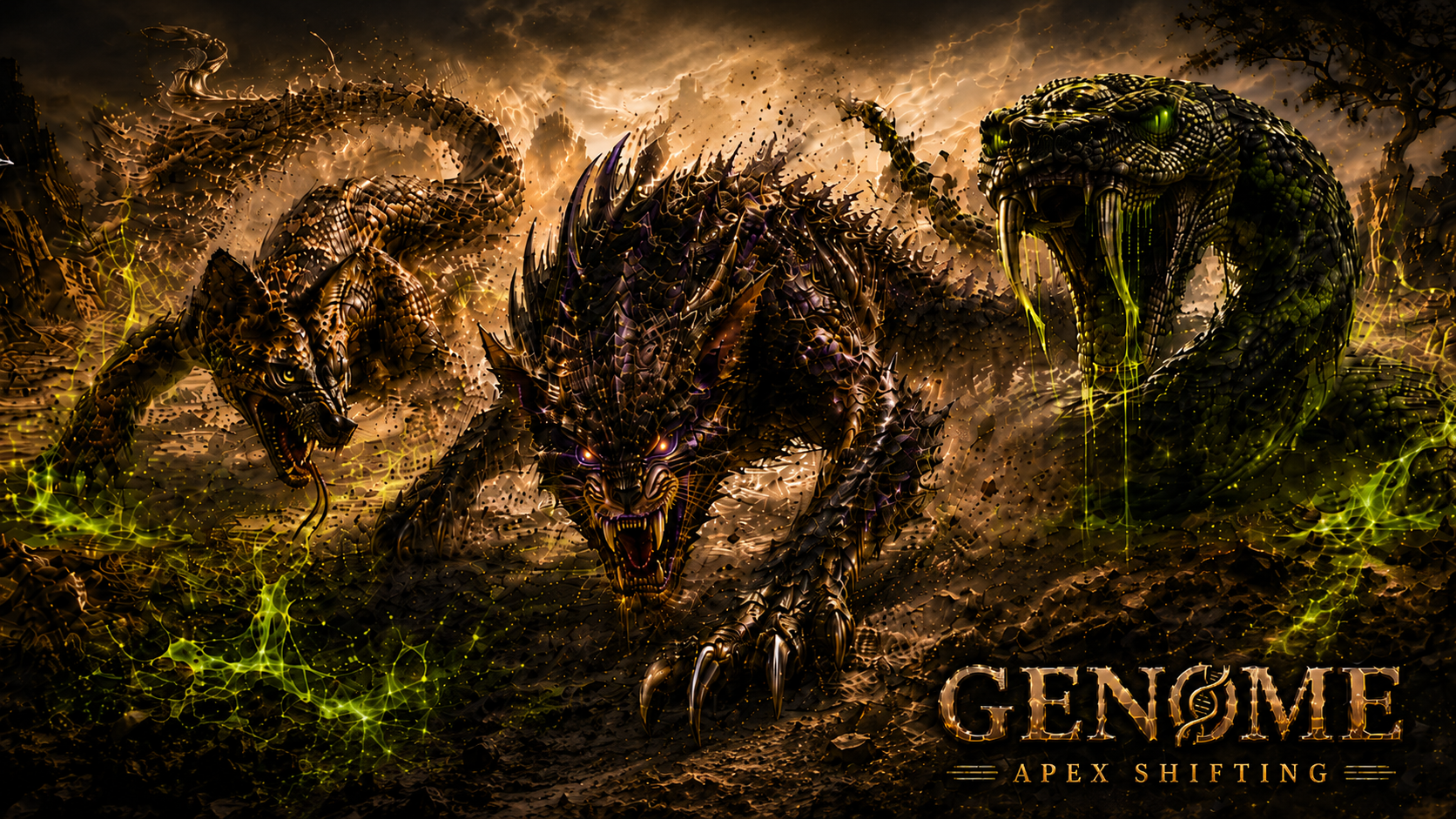
Genome: Apex Shifting is an upcoming indie trading card game developed by GhostWrite Studios.
Players build ecosystems, deploy creatures, splice Genes, spread Afflictions, manipulate Climate conditions and evolve ordinary wildlife into powerful Hybrid Apex predators.
The primary objective is to reduce the opposing player's Dominance to zero through combat, adaptation, environmental pressure, disease and ecosystem control.
Genome treats the ecosystem itself as part of the battlefield.
Creatures interact with predators, prey, environmental effects, Genes, Afflictions and Climate conditions.
The game focuses on adaptation rather than relying only on direct combat. A fallen creature may feed another organism. A Gene may transform a weak species into a major threat. A Climate effect may force both players to rebuild their strategy.
Genome is currently in alpha development and playtesting.
Interested players can contact GhostWrite Studios and include their location, tabletop experience and general availability.
Current in-person playtesting opportunities are focused on the San Diego area.
Both experienced TCG players and newer tabletop players are useful. Experienced players can identify balance and strategy issues, while new players reveal where the rules become unclear or unnecessarily complicated.
Game Night Articles
New Game Night articles will be added here as they are published.
Genome Development
A behind-the-scenes look at ecosystems, Genes, Afflictions, Climate mechanics and Hybrid Apex predators.
Playtesting
Why player confusion, unintended strategies and broken card combinations are valuable development information.
TCG Design
Powerful strategies feel better when opponents have real opportunities to respond.
Game Design
Why a game's world becomes more convincing when players experience it through decisions rather than decoration.
Local Gaming
Community, playtesting, events and the social infrastructure that online marketplaces cannot replace.
Guest Article
Game designers, players, artists, reviewers and local stores may pitch selected guest articles.
Community Contributions
GhostWrite Studios accepts selected pitches for guest articles about tabletop games, trading card games, board games, indie game development, playtesting, local stores and gaming communities.
Potential contributors may include game designers, card artists, playtesters, reviewers, event organizers, store owners and players with useful experience or a strong perspective.
A pitch should include the proposed topic, a short summary, the writer's relevant experience and why the article would be useful to Game Night readers.
Pitch a Game Night ArticleYes. Game Night may feature local game stores, events, playtesting opportunities, community organizers and businesses supporting tabletop gaming.
A store feature should focus on useful information, community value, events or a meaningful story rather than functioning as a disguised advertisement assembled from promotional adjectives.
Tabletop Questions
No. Genome is a major focus, but Game Night also covers other trading card games, board games, game design, playtesting, stores, events and guest contributions.
Selected reviews and analytical articles may be accepted when they offer useful insight rather than merely repeating product descriptions.
Yes. Independent designers may pitch articles about development, mechanics, production, playtesting, setbacks and lessons learned.
Yes. Contact GhostWrite Studios with your location, tabletop experience and availability. Current alpha opportunities are focused on San Diego.
No. Experienced and new players provide different kinds of useful feedback.
Game Night may cover selected tabletop events, store nights, tournaments, playtests and community gatherings.
Not yet. Genome: Apex Shifting is currently in alpha development and playtesting.
Join the Table
Contact GhostWrite Studios about Genome: Apex Shifting, tabletop game playtesting, guest articles, local game coverage or creative collaboration.